Why a Pressing Team Leaves One Pass Open
Why a pressing team leaves one pass open: learn how to spot the receiver being steered and check whether teammates close the next options.
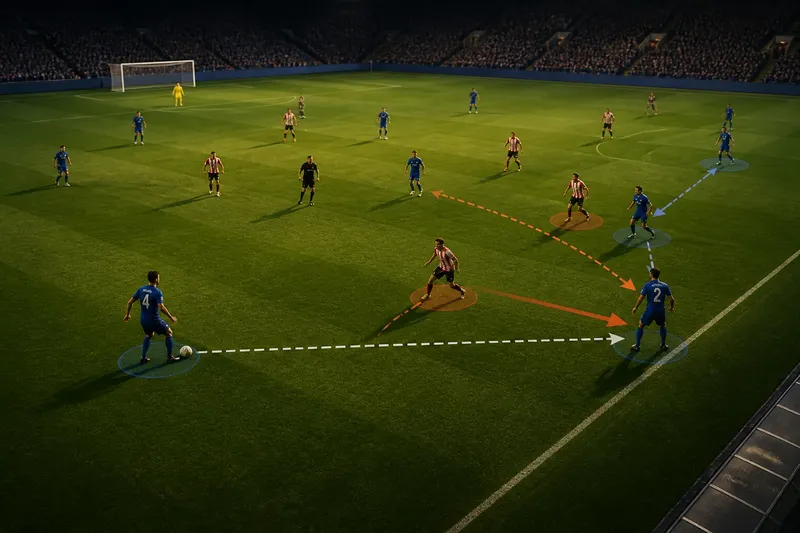
A centre-back rolls the ball towards a right-back who appears to have time, but the nearest winger is already moving to close him from the inside. This is a common pressing pattern: a team may leave one pass open because it expects to pressure the receiver as the ball arrives. Watching the players’ next movements explains whether the pass is being invited or simply missed by the press.
An open pass gives the press a direction
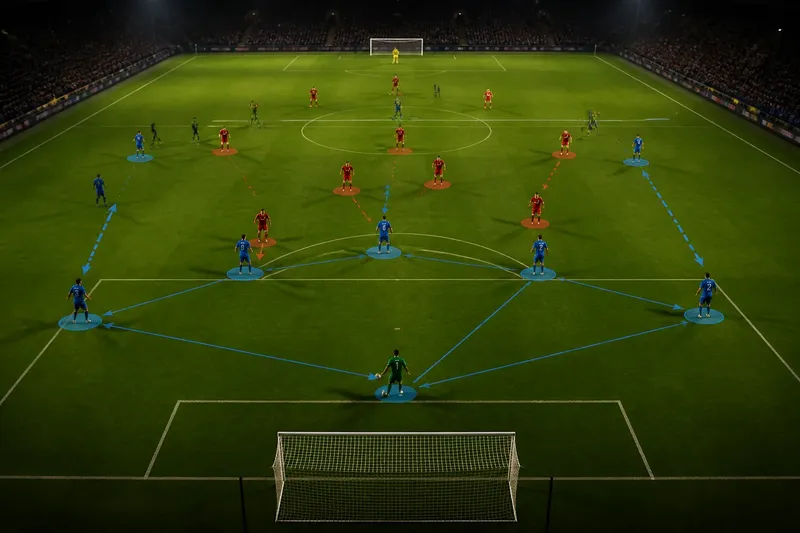
A press is coordinated pressure on the player with the ball and the options around them. Instead of chasing every opponent, a team can angle its first approach to discourage one route and steer play towards another. The invited pass then acts as a cue: nearby teammates move towards the receiver and likely exits.
For example, a forward approaching a centre-back from one side can make a pass across the pitch awkward while leaving a pass to the touchline visible. The receiver may look free, but the defending team is shifting towards that flank. The purpose is to make the next phase more predictable, not merely to run at the ball.
The touchline narrows the receiver’s choices
When a team guides play towards a touchline, the receiver has less room to turn away from pressure on that side. The boundary removes one direction from their choices, allowing defenders to focus on the routes that remain. This can make a wide area easier to press than an open central space.
A winger might close from the inside while a full-back steps towards the ball and a midfielder covers the route back infield. If their timing and spacing are sound, the receiver may be left with a backward pass, a difficult clearance or a risky attempt down the line. The touchline helps narrow the problem, but it does not solve it by itself.
The first presser can hide a preferred route
The player nearest the ball is often called the first presser. Their approach can shape what the opponent sees as available. A straight sprint may leave several passing lanes open, while a curved run can block one lane with the presser’s body and still put pressure on the ball-carrier.
This positioning is called a cover shadow: the presser stands between the ball and a potential receiver, making a direct pass to that player harder. Watch the presser’s path rather than only the ball. Their angle can show which pass the team wants to discourage and which route it is prepared to allow.
Teammates move while the pass is travelling
A planned press depends on several players responding to the same cue. As the ball travels towards the receiver, nearby defenders can advance, reduce gaps between them and cover likely outlets. If they wait until the receiver controls the ball, that player may have time to look up and choose another route.
The ball’s travel gives the defenders a short window to close space. The pass that seemed open can lead directly into pressure, provided the players behind the first presser move together rather than in isolation.
The press must cover the next pass
Closing down the receiver is only part of the plan. If the pressing team crowds the ball but leaves an easy pass infield, the opponent may escape into central space. A nearby midfielder may therefore block that route while another defender watches a forward or covers the pass down the line.
These responsibilities can overlap. One player pressures the ball, another screens a passing lane, and a third stays ready to challenge the likely next recipient. The team does not necessarily assign one marker to every opponent; it tries to make the most useful exits difficult at the moment they are needed.
The receiver’s position can make or break the trap
An invited pass is useful only if the receiver’s choices are manageable. A player already facing forward, with time to control or nearby support, may turn the supposed trap into an escape. A firm pass into the receiver’s path can also change the picture before the pressing players arrive.
Pressing teams therefore consider the receiver’s body orientation, support and the speed of the pass. A player receiving with their back to the pitch may be easier to press than one already looking upfield. The same route can be tempting in one moment and too risky in another.
The open lane carries a real risk
Leaving a pass available carries a cost: the opponent might complete it and advance. The pressing team accepts that possibility because it expects the surrounding movement to make the next action uncomfortable. If a teammate arrives late or the receiver escapes, the lane can become a route through the press instead.
Say a team angles its forward towards the left centre-back and leaves the pass to the right-back apparently clear. As the ball travels, the winger closes the right-back from the inside, the midfielder blocks the return pass infield, and the full-back steps up. Check the next action: if the right-back receives facing the touchline and plays backwards or out of play under pressure, the press has restricted his choices; if he turns and passes infield beyond the midfielder, the trap has failed and the opponents have advanced. The result to watch is the receiver’s actual next pass, not an assumption that possession will change hands.
What should you watch when a pass looks open?
Why would a team let an opponent receive the ball?
The team may prefer to pressure a receiver in a less favourable area rather than let the ball-carrier choose freely. The pass can also help defenders predict where the ball will go next.
How can you tell whether the pass is deliberately allowed?
Look at the first presser’s angle and whether teammates move before the ball reaches its target. If they are already closing the receiver’s nearby options, the route may be part of a coordinated press; if they react only after the control, it may simply have been left open.
What does a cover shadow do?
It places the presser between the ball and a potential receiver, making a direct pass through that lane harder. The presser can then influence play towards another option without marking both opponents directly.
Why does the press sometimes fail?
The receiver may have time or support, or the pressing players may not move together. If the opponent plays beyond the first challenge, the space opened by the press can become an advantage instead.
Track the players around the ball
As the play unfolds, follow the ball-carrier, the nearest receiver and the teammates shifting behind them. Ask which route the first presser is discouraging, where the invited pass leads, and whether supporting defenders close the next options. This gives a clearer reading than judging the press only by whether the first challenge wins the ball.
It is not worth trying to name every pressing variation while the play is moving. Instead, check the visible sequence: who is being allowed to receive, which defender approaches, and what the receiver does with the next pass. That sequence is the clearest way to see whether the open lane led into pressure or gave the opponent a way through.