Goal Kicks, Short or Long: What Each Choice Changes
Goal kicks, short or long, shape where a team meets the next contest. Learn how each restart changes spacing, support and the chance of keeping possession.
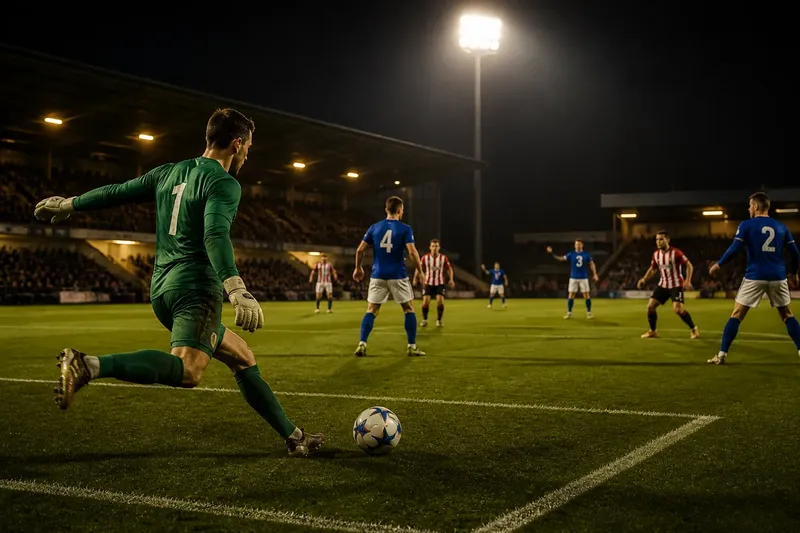
A short goal kick succeeds only if the receiver has a useful next action; a long one needs teammates close enough to contest what follows. Goal kicks, short or long, therefore change more than the distance the ball travels: they shape where the next contest happens and which players are ready for it.
A goal kick sets the location of the next contest
A goal kick is awarded when the attacking side last touches the ball before it crosses the goal line without a goal being scored. The goalkeeper or another player takes it from the goal area. The ball is in play once it is kicked and clearly moves. Under the current Laws of the Game, opponents may be inside the penalty area when the kick is taken, but they must remain outside it until the ball is in play.
This allows a team to restart with a short pass without waiting for opponents to leave the penalty area. But a nearby receiver may still be under pressure: opponents can stand outside the area and close in as soon as play begins. A long kick moves the first duel upfield; it does not remove pressure, but relocates it.
Think of the choice as a question of team shape. A short restart asks whether the team can give the receiver nearby options and play through pressure. A long restart asks whether players can reach the likely landing area, contest the ball and support whoever gets the first touch. Either can be sensible if the players are prepared for the action that follows.
Choose a short goal kick when nearby support is ready
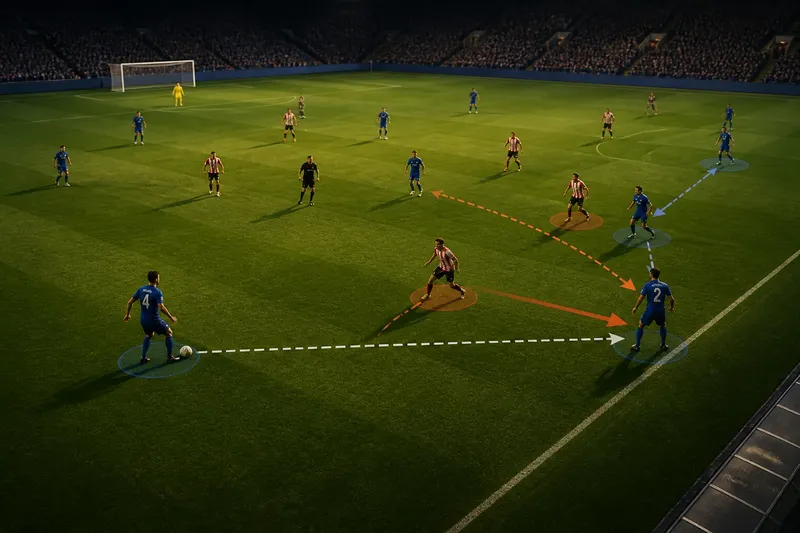
A short goal kick is useful when the goalkeeper has a clear receiver and that receiver has a next pass. A defender who receives with no support may be trapped near the touchline or forced into a hurried clearance. The team needs passing lanes, but players must also remain close enough to help if an opponent presses quickly.
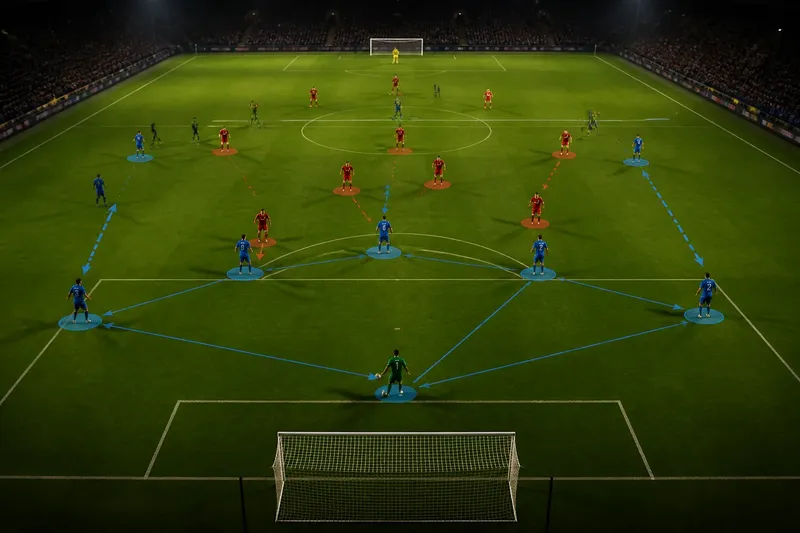
The goalkeeper might pass to a centre-back near the penalty area. Teammates can offer options at different angles: one close enough for a return pass, another farther forward to receive beyond the first line of pressure. If they all stand on the same line, an opponent may screen several options at once.
The potential benefit is keeping the ball and choosing which side to use. The risk is that a misplaced pass or a receiver facing their own goal can give the opposition an attack close to goal. Watch the pass, the receiver’s body position and the next option together. A controlled outcome is visible when the receiver can play forward, switch sides or return the ball; a precarious one is visible when pressure forces a blind touch or hurried clearance.
Imagine a team with two centre-backs positioned apart, a full-back free on one side and a midfielder showing in front of them. If only one opponent presses, the goalkeeper passes to the nearer centre-back; the full-back and midfielder offer different angles. The expected visible result is that the centre-back can pass forward, return the ball or switch play without being immediately crowded. Now imagine two opponents close that centre-back while the midfielder is marked. The same pass leaves no clear next option, so the expected result is a hurried clearance, a backward pass under pressure or a turnover. The contrast is the support around the receiver, not simply whether the first pass reaches its target.
Choose a long goal kick when the team can support the landing area
A long goal kick is more than a request for a forward to win a header. Teammates need to reach the likely drop zone, challenge for the first contact and be ready to collect a knockdown or loose ball. Without that support, the opposition may take possession and begin its own attack.
The goalkeeper can target a central forward, a channel between defenders or a flank. A central ball may bring several players together; a kick towards the touchline can make the contest more compact. The useful target depends on who is available, where opponents are positioned and whether teammates can support the second ball.
The first contact is only part of the outcome. A forward might flick the ball on, hold it briefly or prevent an opponent from controlling it. A nearby midfielder or winger then needs to read the touch and move towards the loose ball. If supporting players are too far away, even a forward’s successful header may end with the opposition in possession.
Long distribution can move the team’s defensive line upfield and avoid playing through an immediate press. The trade-off is accepting a contest instead of controlling the first pass. This may suit a team with a forward who can compete and runners nearby; it is less useful when the target is isolated or opponents are positioned to gather second balls.
What should you watch after the kick?
Follow the first receiver and the players preparing for the action after that. The useful signs differ: a short kick needs passing support, while a long kick needs teammates close to the landing area.
What does a short goal kick try to achieve?
It aims to start a passing sequence from the back, using nearby support to draw pressure and find a route forward. Watch whether the receiver can pass on, turn or return the ball, rather than judging only whether the first pass arrives.
What counts as winning a long goal kick?
Winning the first header is not enough if the opponent collects the loose ball. Look for teammates arriving around the landing area and whether the next touch leaves their side able to continue the move.
Why might a goalkeeper change the target?
Opponents may shift their players and leave a different channel or flank less crowded. A changed target is useful when teammates can still reach the contest and support the next action.
Can a team mix short and long goal kicks?
Yes. Varying the restart can stop opponents from settling into one defensive arrangement, provided the team is prepared for both types of contest.
Read the whole shape, not the distance alone
When watching a goal kick, follow a short sequence: where the goalkeeper aims, how teammates space themselves, who challenges for the next touch and where the ball goes after that challenge. On a short kick, notice whether the receiver has an angled support pass and whether someone is ready farther forward. On a long one, look at who gathers near the target and where a loose ball might fall.
A kick that travels forward is not automatically more attacking. If the receiving team cannot secure the ball, the opposition may take over in a useful position. A short pass is not automatically safe either: a poorly supported receiver can lose the ball under pressure. Judge the restart by the next phase it creates, not just the direction or length of the first kick.
Match the restart to the players available
The goalkeeper’s range matters, but so do the defenders’ comfort on the ball, the forward’s ability to compete and the midfielders’ readiness to move towards a loose ball. A team may also change its approach during a match. If opponents press the short option more aggressively, the goalkeeper can seek a longer target; if they retreat to protect space upfield, a short pass may offer time to build play.
There is little value in making every goal kick elaborate. A complicated set-up can distract from the basic question of whether the intended receiver has support. Nor is repeatedly launching the ball useful if no teammates are near its destination. Keep the decision tied to the shape that is actually available, not an abstract preference for passing or direct play.
For readers learning to interpret goal kicks, the most useful cue is preparation for the second action. A short restart needs options after the first pass; a long restart needs cover around the first contest. When you watch goal kicks, short or long, look for where teammates gather and who is ready to act next.