The Captain’s Armband and What It Actually Means
The captain’s armband identifies a team’s appointed representative and clarifies the role’s limits, helping spectators distinguish a matchday signal from real authority.

The captain’s armband identifies a team’s appointed representative, but it does not give that player authority over the referee or special privileges on the pitch. In football, the captain’s armband is a visible signal; the role’s practical meaning comes from the team and the rules.
The armband makes the captain easy to identify
On a crowded pitch, the band gives the referee, teammates and spectators a quick visual cue about whom the team has designated as captain. That can help when a team gathers or a brief exchange with an official is appropriate.
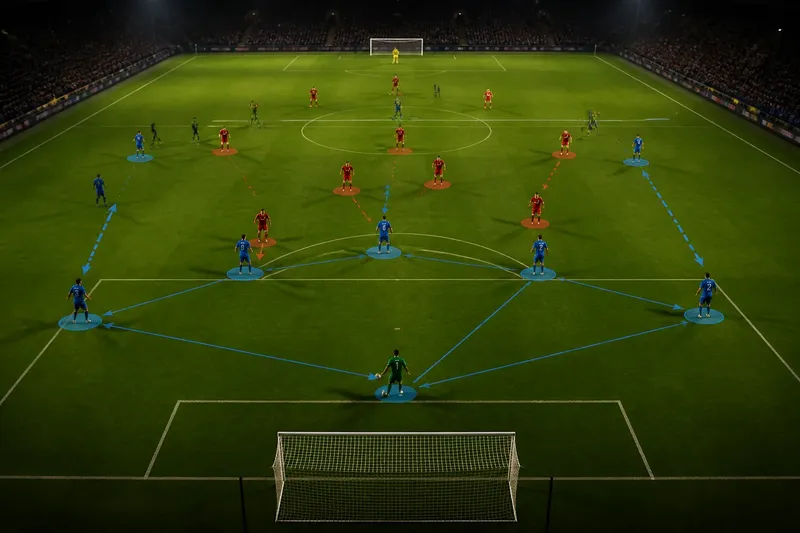
A player’s position changes during a match: a forward may drop into midfield, while a defender moves across to cover a teammate. The armband stays with its wearer, so people do not have to infer the captain’s identity from where that player stands.
The band is also a public symbol. A club may give it to a trusted organiser, a long-serving player or someone who represents the side’s character. The cloth signals the club’s choice; the player’s conduct gives that choice meaning.
The captain’s armband is a team convention, not a story with one origin
There is no single origin story that accounts for every modern captain’s armband. Teams and competitions have their own customs, and the design can vary. It may be plain or carry club colours, an emblem or a captain’s marking.
The useful point for a spectator is what the marker communicates now: the team has designated this player as captain. Its appearance does not establish how much influence that player has over a particular phase of play, and the band itself does not grant extra authority under the Laws of the Game.
The armband does not give the captain control of the match
A captain remains a player subject to the same laws and disciplinary decisions as everyone else. The referee may speak with the captain to explain a decision or address a matter affecting the team, but the captain cannot overrule an official or demand a different application of the rules.
Some competitions give the captain a part in a specific procedure, such as a pre-match choice of ends or kick-off. The details depend on the applicable rules. That limited procedural role is not control of the game.
Nor does wearing the band create a right to approach the referee at any moment. Communication depends on the situation, the official’s judgement and the competition’s expectations. A calm, brief exchange may keep a conversation clear; the armband does not excuse dissent, abuse or persistent confrontation.
Leadership can be shared across the team
The captain is the player formally named for the role, but leadership can come from several people. A goalkeeper may organise the defensive line, a midfielder may set the team’s tempo, and an experienced substitute may steady the group from the bench. None of those contributions requires the armband.
Teams may choose a captain for communication, reliability, experience, composure or the trust of teammates. Those qualities can overlap with tactical importance, but they are not identical. A technically gifted player is not automatically the best captain, and a captain need not be the loudest voice.
Say a team names a quiet centre-back as captain. Before a corner, she checks defensive assignments and speaks briefly with the referee about a substitution; during open play, a midfielder gives louder instructions for the press. The expected observable result is that the band still identifies the captain while leadership is shared according to the moment.
Teams attach responsibilities to the captain in different ways
People commonly expect a captain to communicate, set an example and help teammates stay focused. These expectations belong to football culture and team arrangements; they are not all formal duties in the Laws of the Game.
- Representing the team: If the captain is the designated contact for a suitable exchange, the team has a clear representative; if not, follow the coach’s or competition’s arrangements.
- Organising teammates: If players need a reminder about marking or a set piece, a captain may reinforce the instruction; if another player has the clearer view, let that player organise the group.
- Supporting composure: If a setback distracts teammates, a captain can direct attention to the next action; if the group is already focused, avoid adding unnecessary calls.
- Modelling conduct: If a decision causes frustration, the captain can respond calmly; if the exchange risks becoming confrontational, step away and let play resume.
- Passing information: If team arrangements ask the captain to relay a message between players and staff, use that channel; if the coach has assigned another route, follow it instead.
- Helping with a restart: If teammates are unsure of their positions, the captain can clarify their assignments; if the referee is managing the restart, do not interrupt the official’s instructions.
These tasks do not belong to the band alone. A coach may assign communication responsibilities to several players, and teammates may look to different voices. The captain’s influence depends on the group’s trust, not on the strip of fabric.
The team can change who wears the band
Selection is usually a team or club decision, often made by the coach with input from players or staff. Some sides appoint a captain and deputies; others choose the wearer from the starting line-up. A deputy or another designated player may take over when the usual captain is absent or substituted.
A handover does not necessarily signal a change in status. It is often a practical way to keep the current captain identifiable. The team’s arrangements determine who receives the band, and the referee needs to know who is acting as captain when that matters.
It helps to distinguish the appointed captain from the player currently wearing the armband. A broadcast may identify both, but a substitution can make the current wearer more relevant for an on-field exchange. The band indicates the matchday role, not the whole leadership structure.
A handover usually has a straightforward explanation
The band may pass to another player when the captain is substituted, sent off or otherwise leaves the field. In many teams, a deputy takes over. The change is a practical handover, not necessarily a sign that the departing captain has lost the team’s respect.
One player may remove the band and give it to a teammate; in another team, the replacement receives it as part of the substitution routine. Customs differ, but the purpose is to keep the current captain identifiable.
A club may also give the band to a young player for a particular match or to mark a personal occasion. The gesture can carry meaning for the team and supporters, but it does not expand the player’s formal authority. The significance lies in the club’s choice and the occasion.
The captain’s armband helps spectators read a match
Infer identity, not influence. The band tells you whom the team has nominated as captain; it does not tell you who made a tactical decision, who speaks most in the dressing room or who will settle a disagreement between teammates.
If the captain approaches the referee after a stoppage, that may show the team’s chosen channel for a brief exchange. If the captain gathers players before a restart, the gesture may be an effort to organise or focus them. These are observations of behaviour, not proof that the armband caused the conversation or that every teammate follows the captain’s lead.
It is not worth decoding every handover as a dramatic message. The captain may simply have left the pitch, leaving a deputy or another designated player to carry out the matchday role.
What powers does the captain’s armband actually give?
Can the captain change a referee’s decision?
No. The captain may communicate appropriately with the referee, but the official makes decisions under the Laws of the Game and relevant competition rules. The armband gives no power to cancel a call.
Can only the captain speak to the referee?
No. The captain is often the recognised representative, but that does not mean other players are forbidden from all communication. How players may approach or address officials depends on the situation and the competition’s expectations.
Does the captain have to start the match?
No. A team may appoint a captain who begins on the bench, with a deputy or another designated player wearing the band on the pitch. The team’s selection and procedures determine who serves as captain during play.
Does the captain have to be the oldest player?
No. Age can be one reason a team trusts a player, but it is not a requirement. Clubs choose captains according to their needs, which may include experience, communication or respect among teammates.
The captain’s armband is a compact piece of matchday communication: it identifies the player a team has chosen to represent it, while the work attached to that choice comes from rules, team customs and relationships on the pitch. Watch the band to know whom the role belongs to, and watch the players to see how they share its responsibilities.