A First Football Match on Television: Follow the Far Side
Follow the far side in your first football match on television to spot how wide players make space, move inside and offer a passing option.
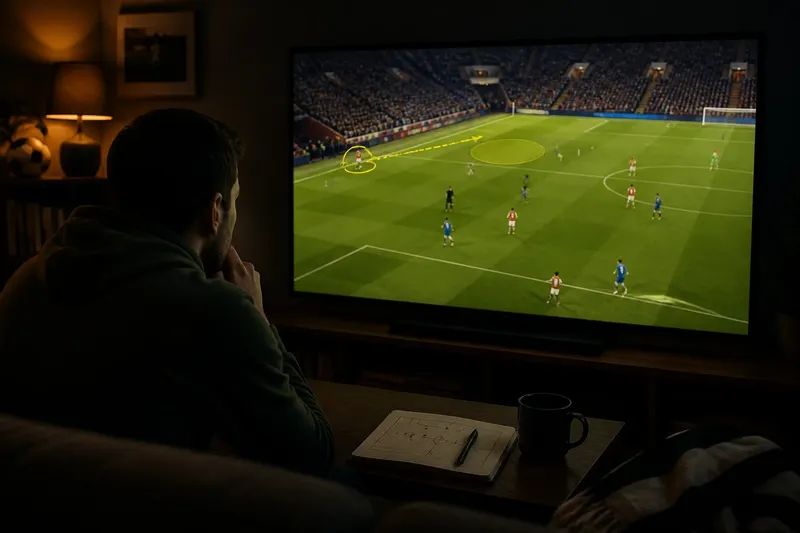
To read a football match on television, follow the far-side players when the ball is elsewhere. They are easy to miss because the camera follows possession, but their positions can explain why a pass opens up, why a defender hesitates or why an attack suddenly changes direction.
The far side means the part of the pitch opposite the ball. If play is near the right touchline, the far side is usually towards the left. For a newcomer, watching that space is not a test of memory or tactics vocabulary. It is a simple viewing habit: find one player away from the ball, notice where they stand, then see what changes when the ball moves.
Far-side football viewing works best with one reference player
Trying to track every player at once makes the picture harder to read. Choose one far-side player, often a winger or full-back, and keep returning to them after the camera cuts or pans. Their role may change during a match, but you can still ask a small set of useful questions: are they close to the touchline, moving towards the middle, or staying available for a pass?
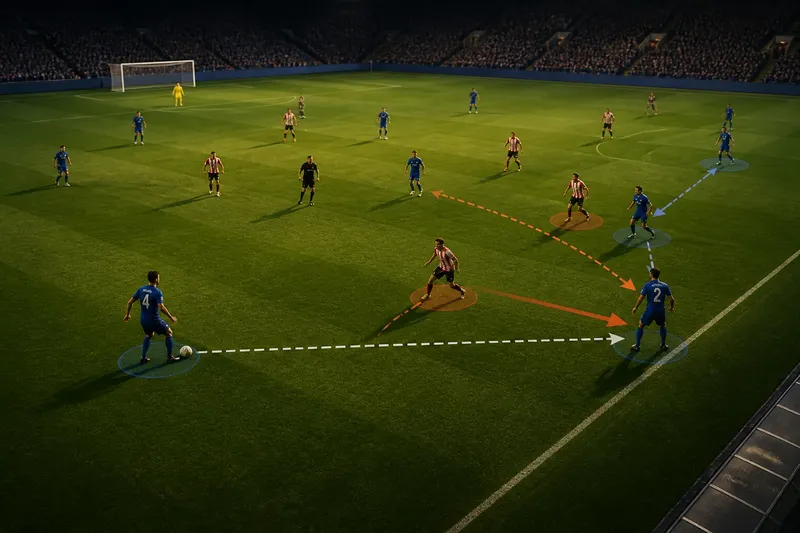
Width is the space a player occupies towards a touchline. A player holding width stays relatively wide rather than joining the crowd around the ball. This can stretch the defending team across the pitch. It may also leave a clear route for a diagonal pass, although the pass itself depends on the player in possession and the defenders’ positions.
Do not worry about naming the exact formation. A team listed as playing one shape can look different as it attacks, and the far-side player’s movement is often easier to understand by its effect than by a formation label.
When the far-side player seems to disappear
A common problem is losing the player as the broadcast camera follows the ball. This usually happens because the action is near one touchline and the far-side player is outside the camera’s chosen frame. Their absence from view does not mean they have stopped participating; it means the broadcast has prioritised the immediate contest.
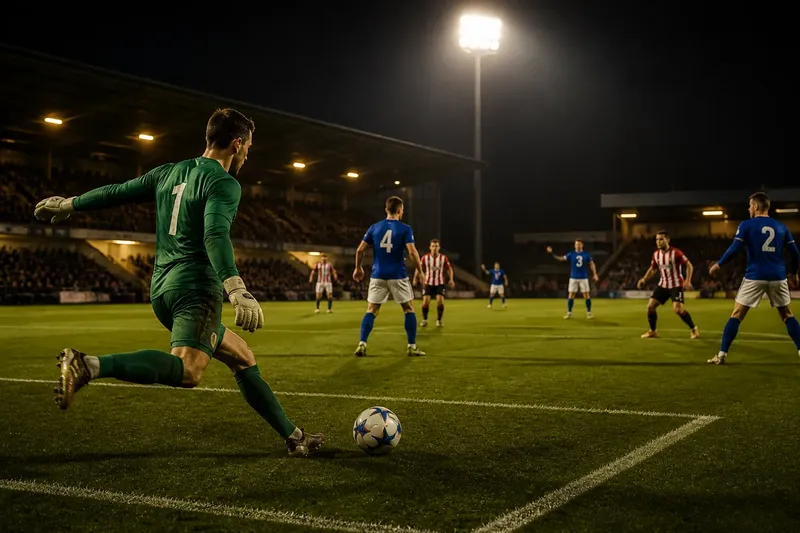
Try a brief scan during a pause in play, such as a throw-in, a goal-kick set-up or a stoppage. Look at the full pitch when the broadcast offers a wide view, identify the player on the far touchline, then return to the ball. If the view stays tight, use the next camera pan to reacquire them rather than trying to guess their position.
It is not worth rewinding every passage or trying to follow several distant players at once. One clear observation in a few attacks is more useful than a running commentary on everyone’s movement.
When width looks passive rather than useful
A player standing wide can appear uninvolved, especially if the ball remains on the opposite flank. Often, though, staying wide is a way to hold a defender in place or keep a passing route available. The player may be helping the attack by occupying space, not by touching the ball.
Watch the defender as well as the attacker. If the defender stays close to the wide player, there may be more room inside for a teammate. If the defender moves away to help defend the ball, the wide player may become a clearer option. These are clues, not proof of a planned move: the next pass and the players’ reactions will show whether the opening matters.
Say the ball is on the right and a left winger stays beside the far touchline. The opposing full-back remains near that winger, leaving a pocket between the defenders. If the ball is switched across the pitch, the winger can receive in space; if a teammate instead moves into the pocket, the winger’s width may have helped create that route without receiving the pass.
When the far-side player moves inside
A wide player may leave the touchline and move towards the centre. This is often called moving inside or coming into the half-space, the channel between the middle of the pitch and the touchline. The movement can offer a short passing option, draw a defender inwards or leave the outside lane open for a teammate.
To tell what the movement might be doing, look at who fills the space the player leaves behind. A full-back may run forward along the touchline; a central midfielder may move into the vacated area; or nobody may arrive, in which case the inside movement could simply bring another body close to the ball. The outcome depends on the timing and the response from opponents.
If you lose track of the player after they move inward, follow the lane rather than their shirt. Notice whether the ball is played into that central space, whether a defender follows, and whether the outside channel remains open. This keeps the viewing task manageable even when the camera cuts away.
When a possible passing option never gets the ball
A far-side player can be well positioned and still receive no pass. The ball carrier may not see them, the pass may be blocked, or a nearer option may be safer. Treat the player’s availability as a clue about the team’s choices, not as evidence that a missed pass was obvious.
Watch the passer’s body position and the nearest defenders. If the passer turns towards the far side, the switch may be on; if they are closed off or under pressure, the far-side option may be difficult to reach. A player who checks back towards the ball can offer a shorter route, while one who runs behind the defence asks for a longer, more ambitious pass.
In a fast attack, glance at the far side just before the ball changes direction. Then watch whether the player holds their position, comes short or runs beyond the defence. You do not need to predict the pass; noticing which kind of option the player offers is enough to make the next phase easier to follow.
What should you watch on the far side?
What does holding width mean?
It means staying near the touchline instead of moving towards the crowded centre. The position can stretch defenders and preserve an outside passing route.
Why does a winger move inside?
Moving inside can create a short option, draw a defender away from the flank or make room for a teammate to advance outside. Look for who uses the space left behind.
How can I tell if the far-side player is available?
Check whether there is a clear route from the ball carrier and whether a defender can intercept or close the player quickly. Availability is about the route and the pressure, not simply being unmarked.
Should I watch the ball or the far side?
Keep the ball as your main reference, then make a quick far-side scan when possession is secure or about to switch. The ball explains the immediate contest; the far side can explain the options forming beyond it.
Use one simple viewing rhythm
For your next match, choose one far-side player, check their position when the ball is settled, and look again when the attack changes lanes. Notice whether they hold width, move inward or become a passing option. Then return your attention to the ball and see whether the movement affects the play.
This far-side football viewing habit does not require you to identify every tactical instruction. It gives you a practical way to see how players away from possession can shape an attack, even when they never touch the ball. If you lose the thread, pick the player up again at the next wide camera view and start with their position, not a guess about their intention.